Age and medical conditions change infection risk, but older adults do not all need the same vaccines or schedules. Prepare prior-dose records, medicines and eligibility questions before discussing products and timing with a clinician.
Key takeaways
- Vaccines to discuss include yearly flu, pneumococcal, shingles and RSV; eligibility differs by vaccine and health history.
- Review the tetanus primary series and boosters, and hepatitisBvaccination/infection history; absence of immunity alone does not define every course.
- Chronic conditions can change vaccine recommendations. Review the exact product, previous doses and current Thai guidance.
- With a limited budget, ask the doctor to prioritise individual disease risks and public coverage rather than applying a fixed order.
Why older adults need vaccines more than anyone
Risk and vaccine responses vary with age and health. Illnesses such as influenza andRSVcan be more severe in older adults, supporting individual prevention assessment; severity is not identical for everyone.
Heart, lung or kidney disease, diabetes, immune status and medicines affect product choice and timing. Check each vaccine’s indication rather than assigning every vaccine to everyone with chronic disease.
Sources: [3] World Health Organization, [7] World Health Organization
Vaccines to review from age 60

Scroll sideways to read the full table →
| Vaccine | Protects against | Doses | Price at the clinic |
|---|---|---|---|
| Influenza | Flu and its complications, such as pneumonia and heart events | 1 dose every year | 490 baht/dose |
| Pneumococcal 20-valent (PCV20) | Some pneumococcal disease, including pneumonia and invasive infection; not every cause of pneumonia | Depends on previous doses and indication; PCV20 may complete the course | 3,900 baht/dose |
| Shingles, recombinant | Shingles and post-herpetic nerve pain | Two doses;product/immune-status-specific timing,usually2–6months | 6,900 baht/dose |
| RSV, adult | RSV, a cause of pneumonia in older adults | 1 dose (no booster currently recommended) | 9,500 baht/dose |
| Tetanus (Td/Tdap) | Tetanus from wounds | Review primary series,boosters and wounds;10years does not cover every situation | 350 baht/dose |
| Hepatitis B | Chronic hepatitis and liver cancer | Product-specific course after reviewing history and testing needs | 450 baht/dose |
Prices include doctor and nursing fees, as published by the clinic until 31 December 2026. See the full list filtered for older adults on the vaccines page.
Sources: [1] U.S. Centers for Disease Control and Prevention, [4] U.S. Centers for Disease Control and Prevention, [5] U.S. Centers for Disease Control and Prevention, [8] U.S. Centers for Disease Control and Prevention
1. Flu: every year
WHO recommends annual flu vaccination and notes that tropical outbreaks may occur year-round. April–June is not the best period for every older adult. Bring the latest dose date, health history and product name. Read vaccination timing; trivalent and quadrivalent options require the actual label to be checked, rather than assuming every product suits every older adult.
Sources: [6] U.S. Centers for Disease Control and Prevention, [7] World Health Organization
2. Pneumococcal: review previous doses
The pneumococcal schedule depends on previous PCV and PPSV23 doses and medical risk. Bring your record before deciding whether PCV20 is needed; one dose is not a universal rule for every vaccination history.
Current U.S. CDC guidance recommends routine pneumococcal vaccination from age 50. That is U.S. guidance: the Thai product indication and applicable local recommendation must also be checked.
Sources: [4] U.S. Centers for Disease Control and Prevention
3. Shingles: preventing pain that is hard to treat
Discuss recombinant shingles vaccination, particularly when immunity is weakened. Product indication, contraindications and timing still need assessment; “non-live” does not guarantee suitability for everyone. Compare live and recombinant vaccines.
Sources: [8] U.S. Centers for Disease Control and Prevention
4. RSV: a newer vaccine for older adults
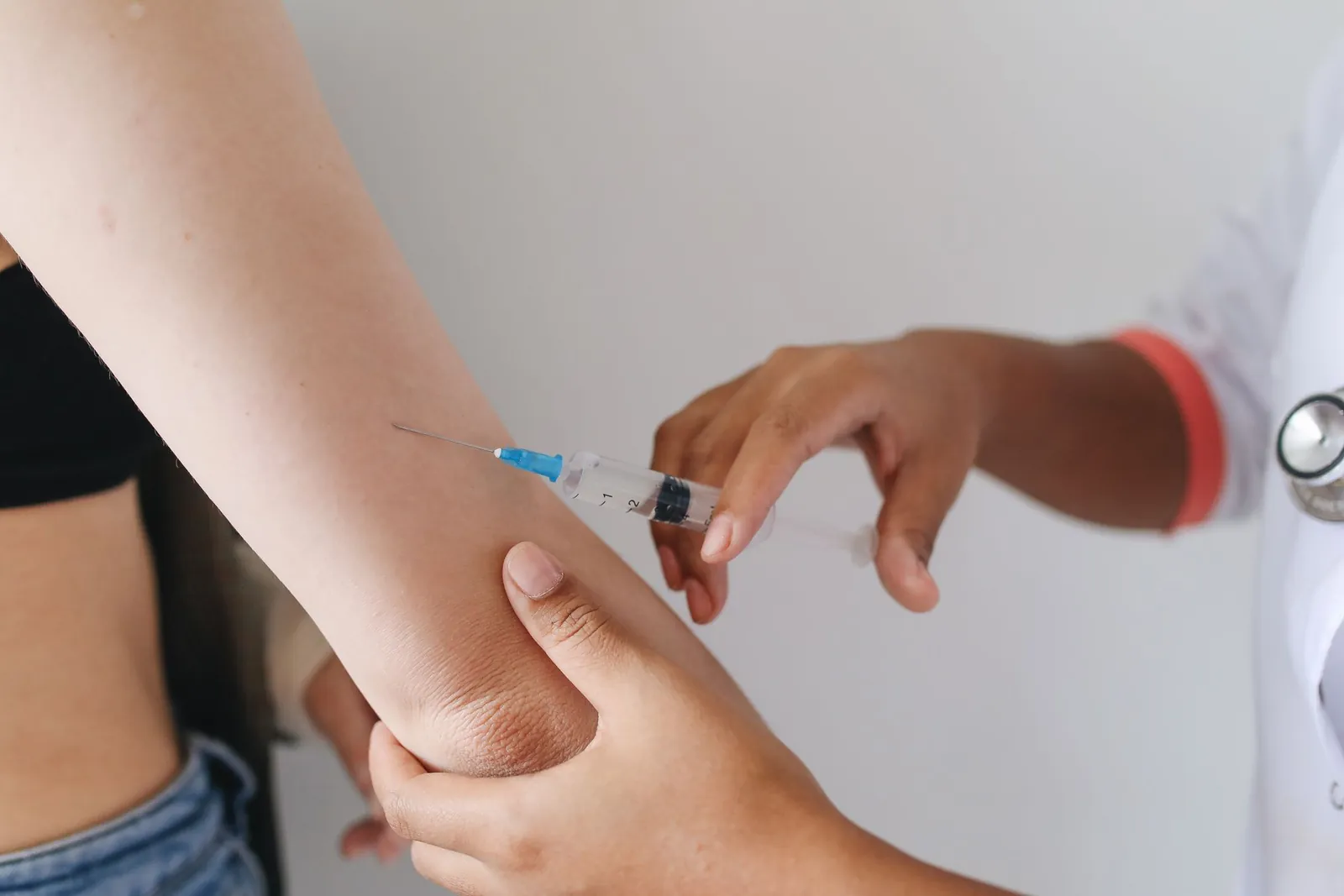
Current U.S. CDC advice recommends RSV vaccination for all adults aged 75 or older, and adults aged 50–74 at increased risk. It is currently a single-dose recommendation rather than an annual vaccine. These U.S. age criteria must not be treated as Thai eligibility without checking local guidance and the product.
Ask the clinician about your lung or heart conditions, immune status, previous RSV dose and the benefits and possible adverse effects. Adult RSV vaccine details include clinic pricing and availability.
Sources: [5] U.S. Centers for Disease Control and Prevention
Basic vaccines Thai adults often lack
- Tetanus: review the primary course, previous boosters and wound history; routine and wound-related schedules differ (350 baht/dose)
- Hepatitis B: review vaccination and infection history and whether testing is needed. Birth year or two negative tests alone should not decide the course (450 baht/dose)
- COVID-19: bring prior doses and health conditions to discuss currentThaiadvice; an older booklet does not establish an annual booster for everyone.
Sources: [1] U.S. Centers for Disease Control and Prevention, [2] สมาคมโรคติดเชื้อแห่งประเทศไทย
One visit: what can be given together
Many vaccines can be given at the same visit, but the clinician should check the combination, products, previous reactions and personal circumstances. RSV coadministration may increase common side effects and supporting data are limited for some combinations; agree on a plan before the visit.
Before bringing an older parent, gather their list of regular medication, drug allergies and any vaccination record. The doctor takes a history and checks blood pressure before every injection. People on blood thinners can be vaccinated, with slightly longer pressure on the injection site. Message us on LINE with age and conditions and the team will check stock and help set the order before you travel.
Good to know: Older adults already collecting chronic medication can review their vaccines at the same appointment. See chronic condition care.
Sources: [5] U.S. Centers for Disease Control and Prevention, [9] U.S. Centers for Disease Control and Prevention
Frequently asked questions
Bring his medical and vaccination records. The clinician can prioritise flu, pneumococcal and other vaccines according to risk, previous doses and eligibility; RSV is not automatically recommended for every healthy 70-year-old.
Related services
Related vaccines
Related articles
Sources
- [1] Recommended Adult Immunization Schedule, United States U.S. Centers for Disease Control and Prevention
- [2] สมุดวัคซีนสำหรับผู้ใหญ่และผู้สูงอายุ (พฤษภาคม 2568) สมาคมโรคติดเชื้อแห่งประเทศไทยAccessed 11 October 2026
- [3] Respiratory syncytial virus (RSV) World Health Organization
- [4] Pneumococcal Vaccine Recommendations U.S. Centers for Disease Control and PreventionAccessed 11 October 2026
- [5] RSV Vaccine Guidance for Adults U.S. Centers for Disease Control and PreventionAccessed 11 October 2026
- [6] Key Facts About Seasonal Flu Vaccine U.S. Centers for Disease Control and PreventionAccessed 12 October 2026
- [7] Influenza (Seasonal) World Health OrganizationAccessed 12 October 2026
- [8] Shingles Vaccine Recommendations: U.S. timing and coadministration U.S. Centers for Disease Control and PreventionAccessed 12 October 2026
- [9] Vaccinating persons with increased bleeding risk U.S. Centers for Disease Control and PreventionAccessed 12 October 2026
This content is general information and does not replace an examination, diagnosis or personal advice from a doctor. Published 21 September 2026
How we select sources and handle corrections