
Trivalent and quadrivalent flu vaccines differ in the B/Yamagata component, which has not been found in confirmed surveillance since March 2020. Absence from surveillance does not establish extinction. This guide explains the formulation transition and what to check for the actual product.
Key takeaways
- Both cover the same two influenza A strains (H1N1 and H3N2) and the B/Victoria lineage.
- Quadrivalent vaccines add B/Yamagata; CDC reports no confirmed detections since March 2020, but it is not known whether the lineage is extinct.
- The WHO has allowed a return to trivalent formulations from the 2024–2025 season, and many countries are switching.
- At Mongkhondee Clinic, trivalent vaccination costs 470 baht/dose and quadrivalent vaccination 490 baht/dose. Product choice depends on age, health, prior doses and the relevant season.
What the 3 and 4 mean
Two main types of influenza virus circulate in people: A and B. The common A strains are H1N1 and H3N2; type B splits into two lineages, Victoria and Yamagata. A trivalent vaccine contains two A strains and one B lineage; a quadrivalent contains both B lineages.
Quadrivalent vaccines added a second B component to cover Victoria and Yamagata when both circulated. The return to trivalent vaccination follows surveillance evidence; it does not make every product identical in dose, age eligibility or side effects.
Sources: [2] U.S. Centers for Disease Control and Prevention
What changed after 2020

Global surveillance has found no confirmed B/Yamagata detections since March 2020, supporting recommendations from WHO and U.S. authorities to remove the component. This does not establish that a particular intervention caused extinction or that surveillance should stop.
CDC reports that U.S. flu vaccines have been trivalent since 2024–2025. Products supplied in Thailand require their actual labels and seasonal formulation to be checked; the U.S. change does not establish Thai stock.
Sources: [1] World Health Organization, [2] U.S. Centers for Disease Control and Prevention
The two vaccines compared
Scroll sideways to read the full table →
| Trivalent (3) | Quadrivalent (4) | |
|---|---|---|
| A/H1N1 | Yes | Yes |
| A/H3N2 | Yes | Yes |
| B/Victoria | Yes | Yes |
| B/Yamagata | No | Yes (not seen circulating since 2020) |
| Eligible age | Per the actual brand and product label | Per the actual brand and product label |
| Doses | Annual vaccination; some children need 2 doses | Annual vaccination; some children need 2 doses |
| Price at the clinic | 470 baht/dose | 490 baht/dose |
Sources: [2] U.S. Centers for Disease Control and Prevention, [5] U.S. Centers for Disease Control and Prevention
So which should you choose?
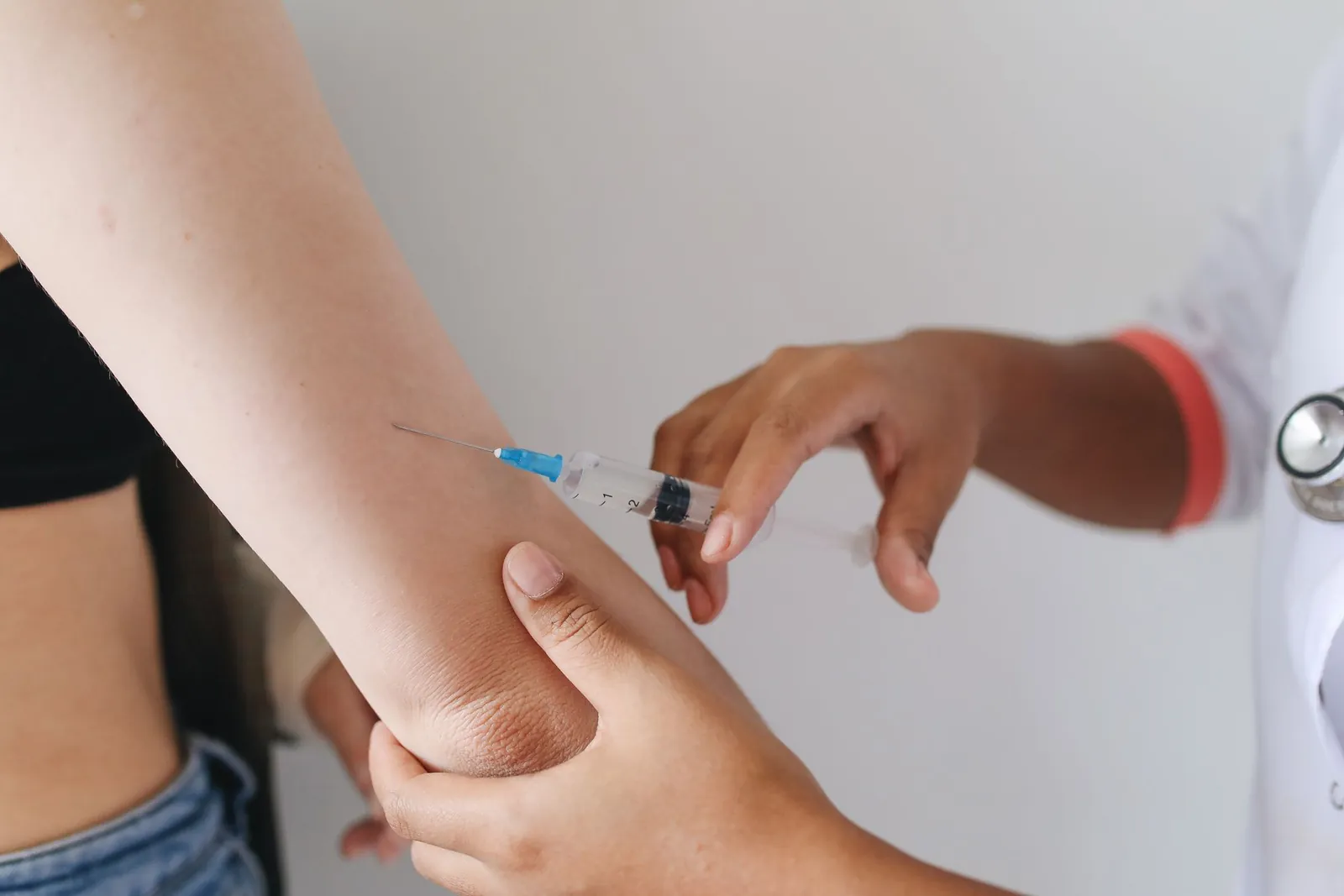
B/Yamagata’s absence from confirmed surveillance is the reason for removing that component. This does not establish identical protection for every trivalent and quadrivalent product or prove what formulation a particular vial contains. The linked WHO composition document is for the historical 2025–2026 northern-hemisphere season; check the supplied product and current season.
Review seasonal vaccination and choose a product suited to age, health and prior doses. Protection varies by product and recipient. Read vaccination timing and children’s doses.
The clinic stocks both the trivalent and quadrivalent vaccines, plus the nasal spray for anyone who'd rather avoid a needle. Message us on LINE to check stock before travelling.
Good to know: Brands and types in stock change with imports and the season. Prices are the clinic's published prices and may be revised.
Sources: [1] World Health Organization, [3] U.S. Centers for Disease Control and Prevention
Are the side effects different?
Three or four describes the number of components, not whether a vaccine is inactivated or a nasal spray, and does not establish identical side effects. Injections may cause local pain, swelling, redness, fever, aches or fatigue. The nasal spray is live attenuated and may cause a runny or blocked nose or sore throat. Check the actual label and health history; see who should take extra care.
Sources: [4] U.S. Centers for Disease Control and Prevention, [3] U.S. Centers for Disease Control and Prevention
Frequently asked questions
A change can be considered if the product suits your age, health and season. Bring the name and date of the previous dose; do not assume every formulation changes every year or suits everyone.
Related services
Related vaccines
Related articles
Sources
- [1] Recommended composition of influenza virus vaccines for use in the 2025–2026 northern hemisphere influenza season World Health OrganizationAccessed 11 October 2026
- [2] Trivalent Influenza Vaccines U.S. Centers for Disease Control and Prevention
- [3] Key Facts About Seasonal Flu Vaccine U.S. Centers for Disease Control and PreventionAccessed 12 October 2026
- [4] Influenza Vaccine Safety U.S. Centers for Disease Control and PreventionAccessed 12 October 2026
- [5] Seasonal Influenza Vaccine Dosage & Administration U.S. Centers for Disease Control and PreventionAccessed 12 October 2026
This content is general information and does not replace an examination, diagnosis or personal advice from a doctor. Published 21 September 2026
How we select sources and handle corrections